
Alachua Regional Juvenile Detention Center Release Paths
Alachua Regional Juvenile Detention Center is a Florida Department of Juvenile Justice facility in Gainesville. Official DJJ material identifies Gilchrist among the counties it serves. Youth may be held while a case awaits adjudication, disposition, or placement. Adjudication is the juvenile-court decision on the allegations. Disposition is the court's order about what happens next.
A youth may leave detention with an authorized person under court and DJJ direction. The youth may instead move to another detention, residential, treatment, or other approved placement. That move ends the first center's physical hold but is not a community release. The controlling order and DJJ record determine the legal status. Public adult systems cannot answer that question.
Confirm Alachua Regional Juvenile Detention Center Release
There is no public named-youth locator documented for this center. The correct route is direct, role-based contact. A parent, guardian, attorney, or other authorized person should gather the youth's full legal name, date of birth, case information if known, and relationship or authority before calling. Staff may need to verify identity and permission before discussing status.
- Call Alachua Regional Juvenile Detention Center through the official DJJ directory number.
- State the authorized relationship and provide the identifying details staff requests.
- Ask whether the youth remains at the center, was released to an authorized person, or moved to another placement.
- Use the juvenile court case and attorney for the order behind the custody or placement event.
- Confirm pickup, reporting, and next-placement instructions directly. Do not infer them from adult procedures.
A court order can precede physical processing, and an electronic court entry can follow it. The court explains authority; DJJ confirms what happened within its custody. Timing, pickup, and placement detail may be withheld from the general public because confidentiality and safety rules apply.
Alachua Regional Juvenile Detention Center Records
The reviewed DJJ directory provides the center's Gainesville location and phone number, while official program review material describes the facility and service role. It does not provide a public release desk, public release schedule, named-youth web search, or public records shortcut for individual detention status. Use the published center line for a properly authorized question.
Alachua Regional Juvenile Detention Center
Gainesville, Florida
Phone: (352) 955-2105
Operator: Florida Department of Juvenile Justice
Official DJJ detention-center directory
Do not send a youth's personal details through an unverified email or web form. Start with the official number and follow staff instructions for identity proof, attorney access, records, or court routing. The Gilchrist Clerk's general adult public search may not expose juvenile material, and a remotely hidden case is not proof that no juvenile proceeding exists.
The DJJ detention-center directory is the source of the successful facility image.
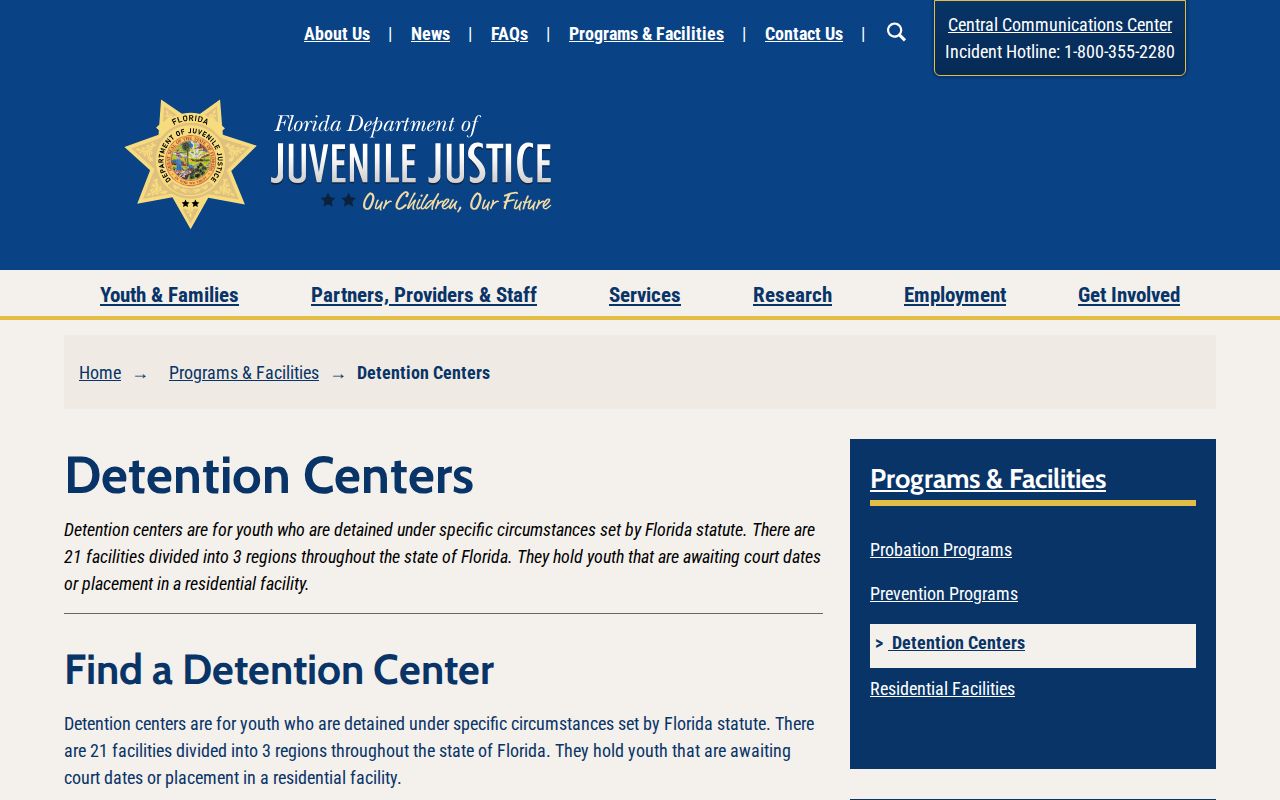
The directory establishes the agency path and Gilchrist service relationship without exposing any named youth record.
Alachua Regional Juvenile Detention Center Record Limits
Florida public-record access is broad for many government records, but juvenile confidentiality is a key limit. A record can exist even when it is not open in a public portal. Access can depend on the requester's identity, relationship to the youth, legal role, and the type of record. Redaction or withholding may protect the youth, victims, witnesses, addresses, health information, and other confidential material.
| Question | Correct source | Public limit |
|---|---|---|
| Is the youth still at the center? | DJJ center through an authorized inquiry | No public named-youth roster documented |
| What order controls release or placement? | Juvenile court and counsel | Remote and general public access may be restricted |
| Did the youth go home? | DJJ confirmation and controlling order | A move can be another placement, not release |
| What records may an authorized person obtain? | DJJ or court records custodian | Identity, role, exemptions, and redaction control |
A request should name the exact record and explain the requester's authority where staff asks for it. That is different from giving a reason for an ordinary adult public-record request. Juvenile confidentiality makes lawful access status-dependent. An attorney can identify the right procedural route when a parent or guardian cannot obtain information through a general inquiry.
Alachua Regional Juvenile Detention Center Release Role
Current official program review materials describe Alachua Regional Juvenile Detention Center as a state-owned and state-operated facility with 45 beds. It serves youth pending adjudication, disposition, or placement. The bed count describes the reviewed facility, not the number of Gilchrist County youth, daily occupants, or releases.
The regional nature matters. A Gilchrist youth can be held in Gainesville even though the local case comes from Gilchrist County. Likewise, a center placement does not convert the case into an adult Alachua County jail matter. The youth remains in Florida's juvenile justice process unless a court record lawfully shows otherwise.
Facility count and service-county facts should never be used to infer a named youth's presence. Call through the proper channel. Staff may confirm only what the caller is entitled to receive, and the court or attorney may be the better source for the legal order.
Adult Searches Exclude Alachua Youth
GCSO SmartWEB covers adult Gilchrist County jail bookings. FDOC's Corrections Offender Network covers felony offenders sentenced to adult state prison or state supervision. Neither system is the right route for juvenile detention at Alachua RJDC. Searching an adult database and finding no match says nothing about whether a youth remains detained, was released, or entered a new placement.
- Juvenile detention
- Short-term secure custody under DJJ and juvenile-court authority.
- Placement
- An authorized next setting that may still restrict where the youth lives or moves.
- Release
- Departure from detention according to the court and DJJ plan, often to an authorized person.
- Confidential
- Not open to unrestricted public access under the rules that govern the record.
VINELink is not documented here as a public youth-release archive. The BOP locator concerns federal prisoners. ICE's public locator expressly does not search people under 18. None should be used to work around DJJ or court confidentiality. For adult county and state custody distinctions, the Gilchrist County release-record overview keeps those routes separate from this juvenile path.
Alachua Placement Versus Release
Ask a precise question: did the youth leave secure detention to an authorized person, or did DJJ transfer the youth to another placement? The words “left,” “discharged,” and “released” may be used loosely in conversation. The official record and order control. A transport vehicle leaving the center, a missing public result, or a change in who answers the phone does not establish community release.
When an authorized caller receives a destination or reporting instruction, record the staff contact, date, and exact wording. Confirm where and when the responsible adult must appear, what identity proof is required, and which court or DJJ office handles the next step. No official source reviewed here gives a universal pickup point, processing hour, transport promise, or property-return rule for this center.
Safety can limit what staff says about a youth's current or future location. That limit should be respected. The absence of public detail protects the juvenile process and does not imply that records were lost. Note: A transfer closes one detention placement but may continue custody, treatment, supervision, or court control elsewhere.
Gilchrist Juvenile Court Follow-Up
A juvenile court order may address detention, release to a parent or guardian, conditions, adjudication, disposition, or later placement. Counsel can interpret the order and tell the family which office controls the next step. The physical center should confirm its own custody action, while the court record explains the legal authority.
Do not assume the adult Circuit Court felony and County Court misdemeanor divisions describe the juvenile file. General public access through the Clerk's remote portal may be limited by Florida court-access rules and juvenile confidentiality. An authorized party should use the case number, attorney, and Clerk instructions tied to the actual proceeding rather than an anonymous adult name search.
If the center directs the caller to a DJJ office or court contact, follow that verified route. Keep names, youth identifiers, and placement facts out of public messages. The goal is to confirm lawful release or placement and meet the youth's next required step without exposing confidential data.
Families should also separate a detention question from a broad records request. The first asks staff for an authorized, current status. The second seeks an existing document and may require a different custodian, proof of authority, redaction review, or a court process. Using the exact case and record type helps the agency route the request without disclosing more information than the law permits.